Location
Chrysoskalitissa Monastery
Chrisoskalitissa, Chania
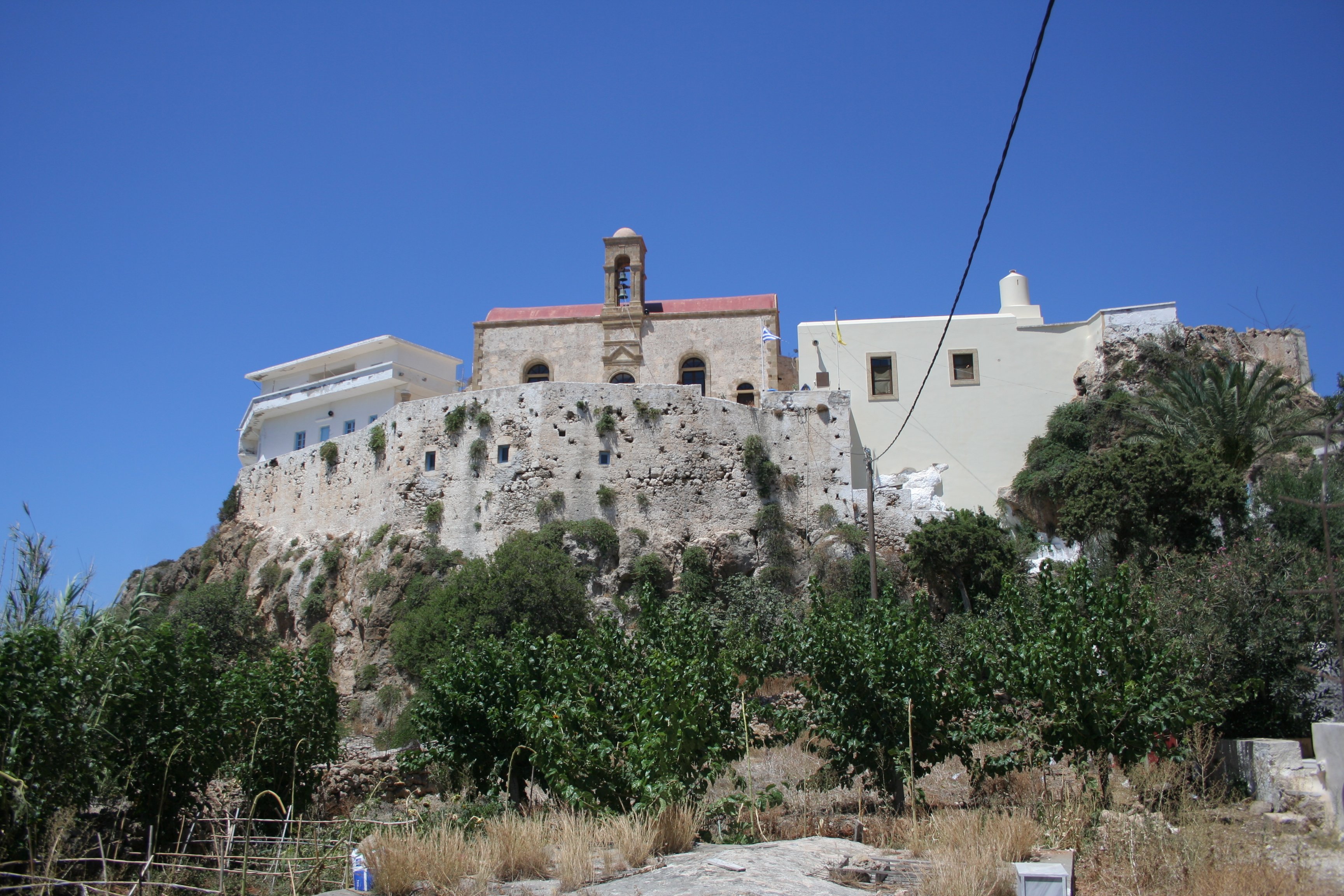
Chrysoskalitissa Monastery – Chrisoskalitissa, Chania
Chrysoskalitissa Monastery, dedicated to the Dormition of the Mother of God (Κοίμηση της Θεοτόκου), is a fortified 17th-century monastery built on a rocky elevation about 35 meters above sea level. Its name means “Golden Step” and is linked to a local legend claiming that one of the steps leading up to the monastery was made of pure gold, but only the sinless could see it. In earlier centuries the monastery served as a lookout point and a refuge from pirates, and today it is one of the most important sanctuaries in southwestern Crete.
Description
Chrysoskalitissa Monastery stands alone on a white cliff overlooking the Libyan Sea and the island of Elafonisi. Its location has made it, for centuries, both a place of prayer and a watchpoint guarding the coastal route. Built in the 17th century, likely on the site of an earlier Byzantine monastic center, it was fortified with thick walls that protected it from frequent attacks by Saracen pirates and corsairs.
The monastery’s name — Chrysoskalitissa, meaning “Golden Step” — is tied to a legend that still fascinates pilgrims and visitors. According to tradition, out of the 98 steps leading to the monastery, one was made of gold, but only a person of complete spiritual purity could see it. For everyone else, it remained invisible. In theological interpretation, this symbolizes the spiritual path of purification — an ascent in which the light of divine wisdom becomes visible only to those who walk in humility and faith.
The interior of the complex is modest, in keeping with the tradition of Cretan coastal monasteries. The main church (catholicon) houses the venerated icon of the Mother of God “Chrysoskalitissa,” honored with special devotion by the faithful. Next to it is a small museum containing old liturgical books, processional crosses, manuscripts, and liturgical vessels — testimony to the centuries-long spiritual presence of this place.
During the period of Ottoman occupation the monastery served as a center of resistance and a refuge for rebels. Its remote location and natural defensive qualities allowed weapons, the wounded, and fugitives to be hidden there. During the Cretan uprising of 1821, and again in the later revolt of 1866, the monks of Chrysoskalitissa aided insurgents at great personal and communal risk.
Today the monastery retains an atmosphere of peace and contemplation. Its white walls contrast with the deep blue of the sea, and the view from the terrace is breathtaking — especially at sunset, when the light falls across the rocky cliffs and the bay of Elafonisi. On the Feast of the Dormition of the Mother of God (15 August), the monastery comes to life with a solemn liturgy and a pilgrimage that has drawn worshippers from across the region for centuries.
Chrysoskalitissa Monastery is a place where the sacred meets legend. Whether the golden step truly existed is difficult to say, but standing on the stone stairs leading toward the sanctuary, it is easy to believe that each step upward is a symbol — not toward earthly gold, but toward the light that has shone over southern Crete for generations.
Location
Chrisoskalitissa, Chania
Coordinates: 35.31125, 23.53327