Location
Church of Panagia, Anisaraki
Anisaraki, Chania
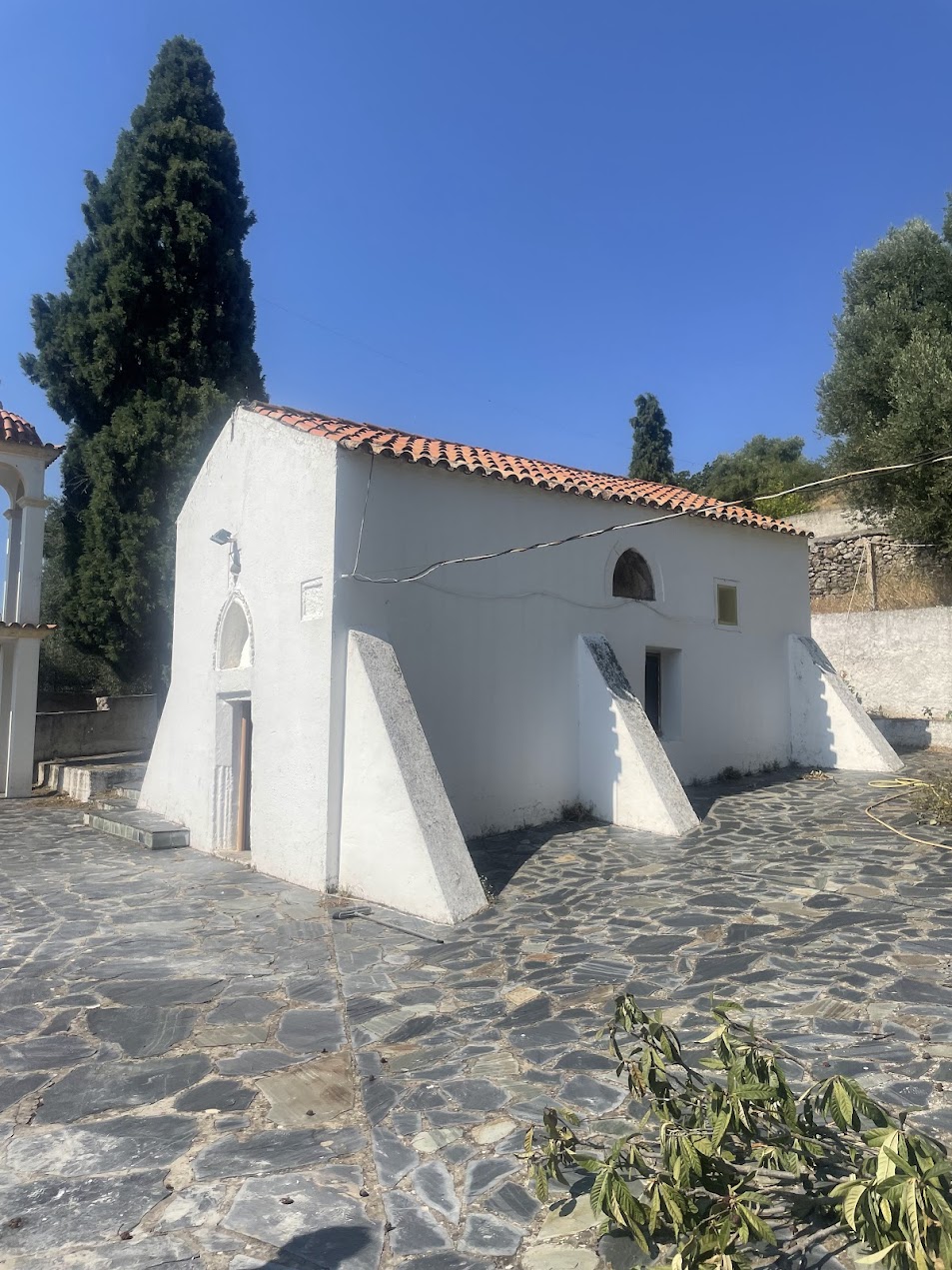
Church of Panagia, Anisaraki – Anisaraki, Chania
Ναός Παναγίας στο Ανισαράκι — Naós Panagías sto Anisaraki The Church of Panagia in Anisaraki (referred to above as the “Church of the Virgin Mary”) is a rural sanctuary set within the mountainous landscape of the Selino province, near Kandanos in southwestern Crete. Although modest in scale, the building represents an important example of local sacred architecture and late medieval mural painting on the island. It was constructed as a single-nave, vaulted church with later narthex-like additions, and features a Venetian portal in the western wall, attesting to structural adaptations during the Venetian period. As such, the monument embodies multiple architectural layers: a Byzantine core, Venetian interventions, and the local tradition of the Cretan rural church. Its significance within scholarly and cataloging contexts derives both from the state of preservation of its frescoes and from its place within the dense network of village churches characteristic of the Selino region—an area particularly rich in small ecclesiastical buildings dating from the 14th to the 15th century.
Description
The Church of Panagia in Anisaraki is a single-nave, barrel-vaulted structure with two narthexes (vestibules) reinforcing the western side of the building. The original entrance was located in the southern wall; the surviving arch and an inscription dated to 1614 attest to one of the phases of reconstruction or adaptation of the church. A Venetian portal set into the western wall points to active Venetian involvement or intervention in the fabric of the building. Sources indicate that the interior frescoes date to approximately 1390–1400 and are described as being in “good” condition—a fact of particular importance given the age and remote location of the monument.
The interior is decorated with wall paintings that include biblical scenes, figures of saints, and decorative elements characteristic of late Byzantine iconography as developed in Crete. Their state of preservation allows for the interpretation of iconographic programs and the identification of local workshop styles, making the church an important point of reference for the study of sacred art in the rural context of Crete.
The church’s location in Anisaraki—within a relatively isolated setting of mountains and terraced fields—highlights the fact that even small communities in southern Crete invested in the construction and decoration of churches, reflecting a strong sense of religious identity and tradition. The church functioned as a local place of worship and communal life, while at the same time forming part of the wider network of ecclesiastical buildings in the Selino province—an area particularly rich in medieval wall paintings and small rural churches.
With regard to preservation and access: although the building remains in use or may be accessible to worshippers and visitors, caution is required. Conservation standards are not comparable to those of major tourist monuments, and access may be limited. A visit is nevertheless worthwhile, offering a striking contrast between the church’s simple exterior form and the richness of its interior decoration, as well as an appreciation of its landscape setting—olive groves, village life, and an unspoiled, quiet atmosphere.
For any catalog of Cretan monuments, the Church of Panagia in Anisaraki is representative of the rural sacred architecture of the Selino region—not large in scale, but rich in content, combining architecture, history, and art in a location less frequented than the island’s best-known tourist centers, yet of considerable value to scholars as a source of less commonly highlighted examples of Cretan heritage.
Location
Anisaraki, Chania
Coordinates: 35.33205, 23.75958