Location
Church of Saint Paraskevi, Voutas
Voutas, Chania
Church of Saint Paraskevi, Voutas – Voutas, Chania
The Church of Saint Paraskevi in Voutas is a small, single-nave sanctuary hidden within the mountainous landscape of the Selino region, on the western side of the village. Modest and unassuming at first glance, it is nevertheless one of the most intriguing chapels in this part of Crete thanks to the preserved frescoes dating to the second half of the 14th century. Its simple form, typical of rural Byzantine churches, stands in marked contrast to the emotionally charged and intense painted program of the interior—a place that allows the visitor to encounter the authentic, austere religiosity of historical Crete.
Description
The interior of the church preserves a cycle of frescoes dated to 1372–1373. The paintings include a standard repertoire of Christological scenes and figures of saints, but the most striking elements are the depictions of the punishments of sinners—dynamic, harsh, and almost theatrical. Faces, gestures, and the details of instruments of torture are rendered with remarkable expressiveness, characteristic of late Byzantine Cretan painting. This part of the decorative program sets the chapel apart from other churches in the region and constitutes a powerful testimony to local interpretations of eschatological visions.
The style of the frescoes reveals the hand of a painter working within the artistic milieu of western Crete: strong outlines, pronounced linearity, intense reds and ochres, and clear narrative structure. Although it is not possible today to identify the artist with certainty, the paintings demonstrate a high level of technical skill. This is art created for a local community, yet firmly rooted in the broader tradition of Cretan monumental painting.
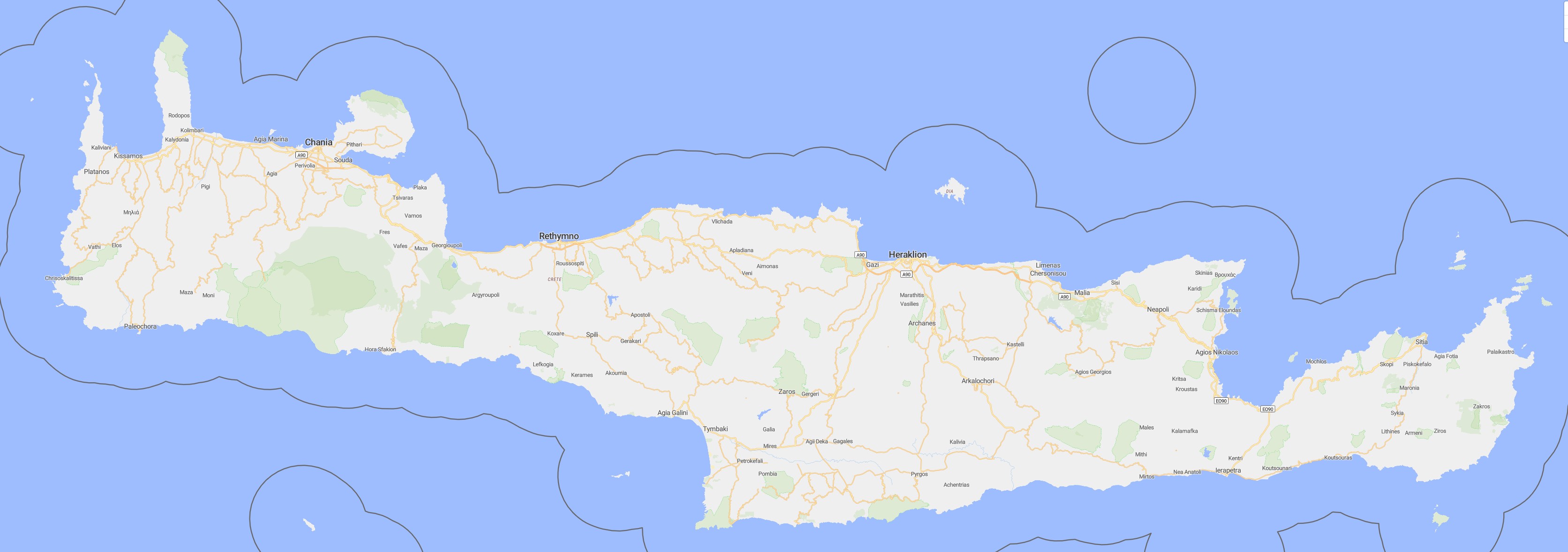
The church’s surroundings further emphasize its character. Agia Paraskevi stands alone, secluded amid the silence of the Selino mountains. The approach from the village follows a narrow road toward Kalamio and Sklavopoula; the farther one moves from the houses, the more apparent it becomes that this was a place of prayer for people living close to the land, dependent on the rhythms of fields, weather, and tradition. In the southern light, the interior is immersed in semi-darkness, and the fresco scenes emerge slowly—as if to remind the visitor that in historical Crete the boundary between the sacred and everyday life was exceptionally thin.
This is one of those places that reward those who stray from the main road. A small church, yet one that leaves a deeper impression than many larger monuments—through its sincerity, silence, and bold iconography, in which the imaginative world of 14th-century Selino is vividly reflected.
Location
Voutas, Chania
Coordinates: 35.29458, 23.64133