Location
Church of Panagia, Patsos
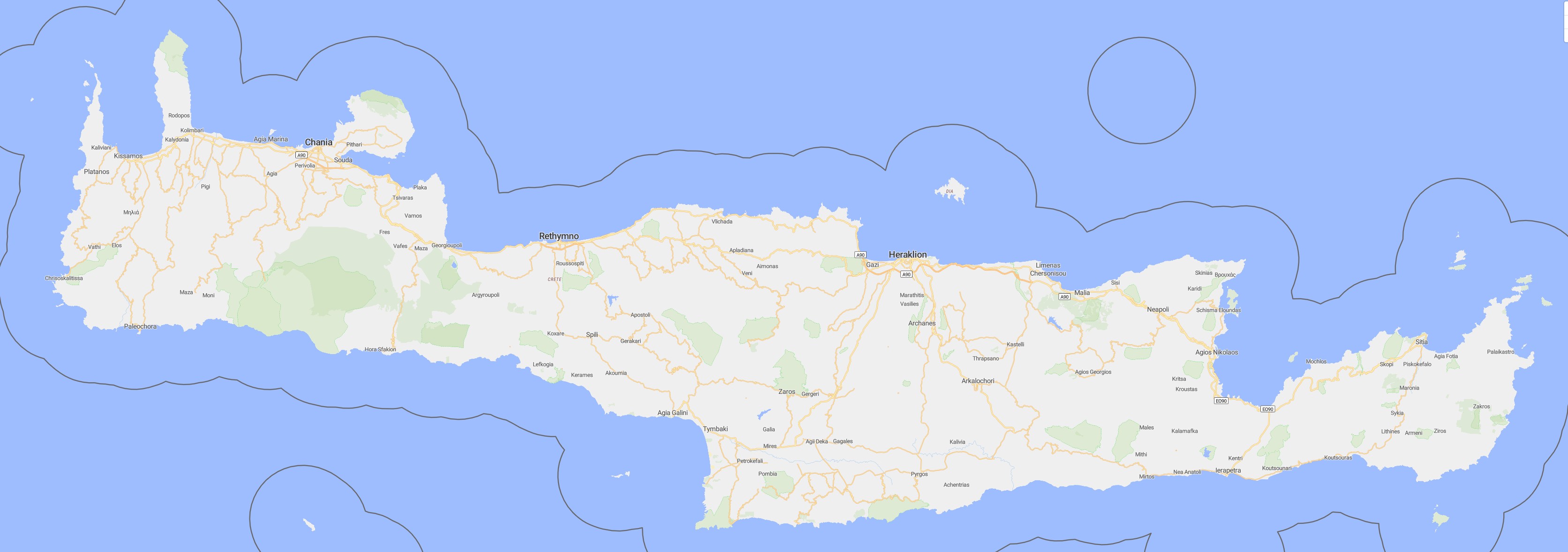
Patsos, Rethymno
Church of Panagia, Patsos – Patsos, Rethymno
Panagia Patsos is a place where history feels as though it has been interrupted mid-sentence. You stand among walls that long ago lost their roof, yet still carry the weight of something ancient and profoundly significant. Light enters through gaps that once did not exist, and the wind moves across the damaged surfaces as if searching for remnants of old prayers. It is one of those places that needs neither reconstruction nor a fully preserved structure to ignite the imagination. Silence is enough, because the ruins speak on their own—of the days when Patsos was a lively village at the heart of Amari, of pilgrims gathering here for feast days, of the artists who painted the frescoes that now hang in the museum in Rethymno like pieces cut away from their own core. The church is empty, but not dead. In the sunlight you can trace the outline of the former dome, the foundations, and the strong curve of the apse. Looking at it all, you quickly understand that Panagia Patsos is not “just another ruined church.” It is a fragment of a much larger, far older story. Every stone here carries its own weight.
Description
The Church of Panagia in Patsos lies in the Amari region, near the entrance to the Agios Antonios Gorge. It is a structure with a layered history—the earliest phase was likely built in the eleventh or twelfth century, and around the fourteenth century the church underwent significant reconstruction. From that period came the late Byzantine frescoes, fragments of which survive today and have been transferred to the Archaeological Museum of Rethymno.
The church belonged to the four-column, domed type, a form that indicates its importance within the local community. Venetian sources associate it with the influential Kallergis family, who funded numerous religious foundations on Crete during the period of Venetian rule.
Today, only the walls, parts of the foundations, and the clearly defined outline of the apse remain. The roof collapsed long ago, and vegetation has begun to creep into the gaps between the stones. Yet the preservation state still allows one to imagine the original shape of the sanctuary and its liturgical space.
This is a place where history and landscape meet in a remarkable way: standing among the ruins, one hears the wind carrying the echo of the gorge, and the scent of damp earth mingles with the fragrance of the pine forests of Amari. For many, it is here that one sees most clearly how nature and time conduct their long, slow conversation with what remains of human presence.
Location
Patsos, Rethymno
Coordinates: 35.24738, 24.57229