Location
Church of Christ the Saviour, Plemeniana
Plemeniana, Chania
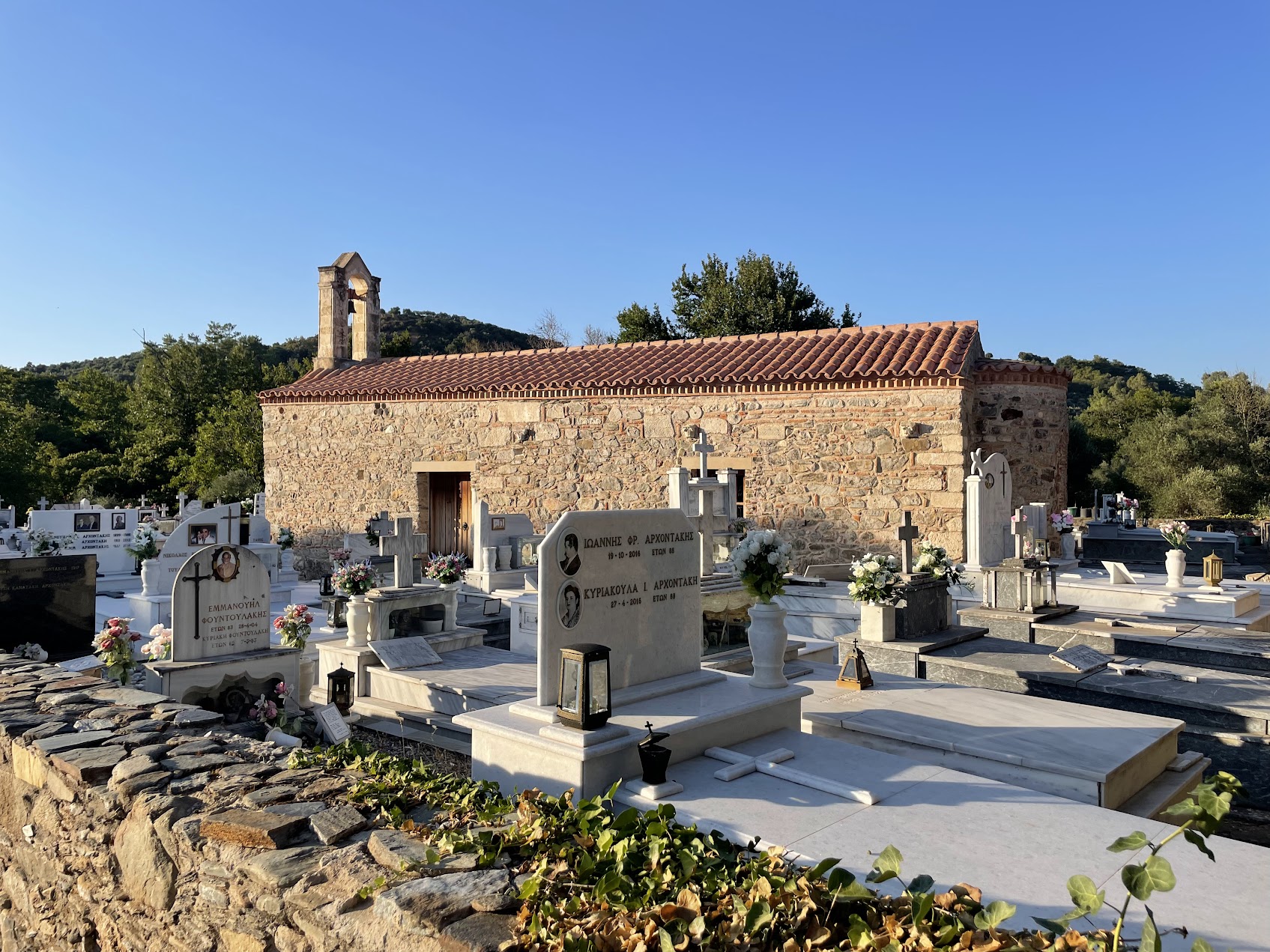
Church of Christ the Saviour, Plemeniana – Plemeniana, Chania
The Church of Christ the Saviour in Plemeniana, in the municipality of Kandanos–Selino in western Crete, is one of the larger and more architecturally complex examples of rural medieval churches in the Selino region. Nestled in an unassuming valley, the village shelters a structure that stands out—especially when compared with the smaller local chapels—by its size, layered architectural phases, and richness of its wall paintings. Likely built during the medieval period—perhaps in the thirteenth century—on the site of an earlier early Christian church, it bears witness to the continuity of worship and to the transformations that shaped this part of the island: from Byzantine times, through the Venetian era, and into later adaptations. For a catalogue of Cretan monuments, the Church of Christ the Saviour in Plemeniana represents a site where sacred architecture exceeds the purely local scale, and where its walls preserve multiple layers of history, art, and communal life.
Description
The Church of Christ the Saviour was erected on the site of an earlier basilica or early Christian structure—evidenced by fragments of marble architectural elements embedded in the walls and by the remains of earlier foundation lines near the original façade. The building stands out in its surroundings: compared with typical single-nave rural churches in the Selino region, it is larger and more architecturally prominent. In the nineteenth century, it was extended westward—the original western wall was removed and a new section added—testifying to the continuous use of the site and its enduring significance for the local community.
The church interior is adorned with numerous frescoes, considered the work of three successive painters or workshops: the first continued the tradition of late thirteenth–early fourteenth-century painting; the second reflects a more folkloric, local style; the third exhibits strong Western European influences. The fresco cycle includes liturgical scenes, depictions of the patron and various saints, as well as decorative motifs. Despite alterations, the architecture retains characteristic features: a barrel vault, a semicircular apse, and a nave layout that could accommodate more worshippers than the average rural chapel.
Its location in the Plemeniana valley allowed the agrarian community to secure the materials and resources needed for constructing and decorating such a church—a fact that itself speaks to the standard of living and religious activity of the population. The landscape—olive groves and the tranquillity of the Selino region—adds to the atmosphere of contemplation that is increasingly rare in more touristic parts of the island.
A rural road from Kandanos leads to the site; the church continues to function as a local place of worship, though it is not a major tourist destination. This makes visits intimate, offering conditions conducive to close observation of the frescoes and architectural details that are often overlooked in guidebooks.
The Church of Christ the Saviour in Plemeniana is an important entry for any Cretan monument catalogue—not only as a sacred structure but as evidence of communal activity, the adaptation of religious architecture over the centuries, and the resilience of local culture in the lesser-known corners of Crete.
Location
Plemeniana, Chania
Coordinates: 35.32546, 23.72564