Location
Early Christian Basilica of Rimokklisa
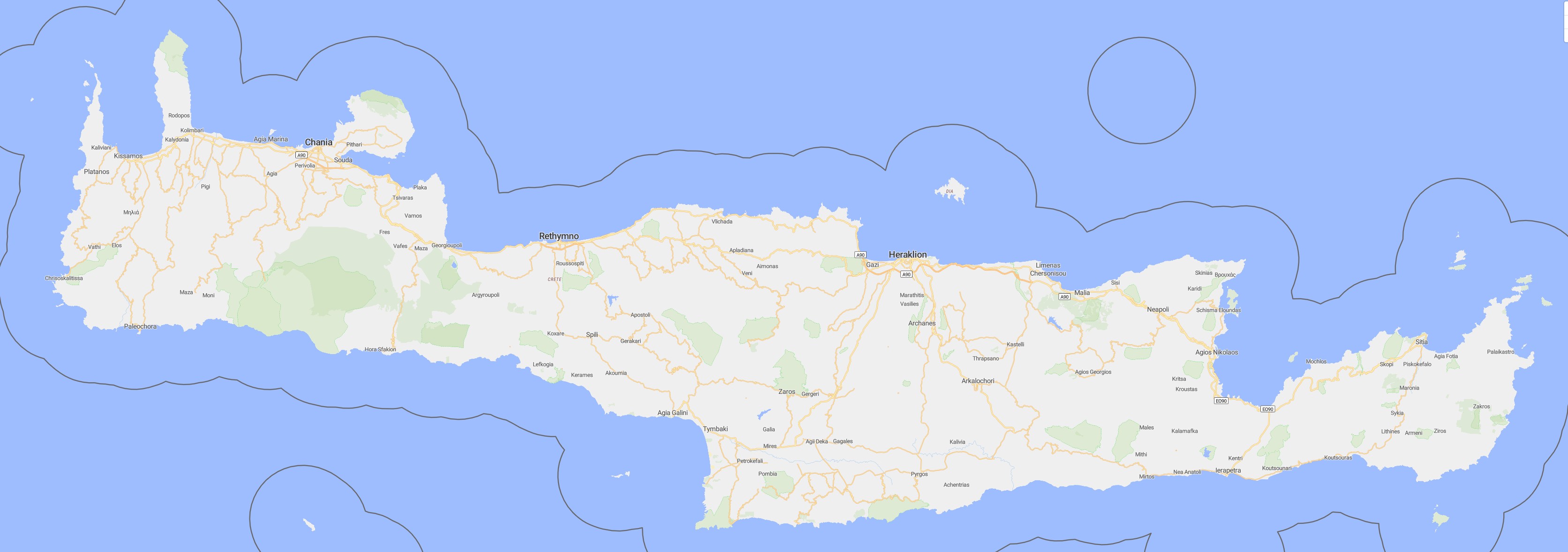
Vizari, Rethymno
Early Christian Basilica of Rimokklisa – Vizari, Rethymno
The Early Christian Basilica of Vizari, locally known as Rimokklisa (“the abandoned church”), is one of the most important sacred monuments in the Amari region of Crete. It is located in the area called Ellinika, near the village of Vizari in the prefecture of Rethymno. The basilica was discovered during archaeological excavations carried out in 1956 by K. Kalokyris. It is a three-aisled church with a narthex and a wooden roof, measuring 34 by 17 metres. The floor was originally covered with clay tiles. The first phase of construction dates to the sixth century, and the building underwent modifications in the seventh and eighth centuries. It was ultimately destroyed in 824 during the Arab invasion. The church was dedicated to the Mother of God as well as to Saints Blaise and Theodore. It is believed that it may have served as the cathedral of the diocese of Syvritos. During the excavations, archaeologists uncovered Ionic and Corinthian column capitals, the colonnade separating the aisles, liturgical vessels, lamps, and both Byzantine and Arab coins. Today, the ruins of the basilica are accessible to visitors and represent a valuable example of early Christian sacred architecture on Crete.
Description
Nestled among the olive groves of the Amari valley, the Rimokklisa Basilica in the village of Vizari is one of those places that speak powerfully to the religious continuity of Crete—from ancient cults to Christianity. The church was built in the sixth century AD, during the era of early Byzantium, when the island served as an important administrative and spiritual centre of the Eastern Roman Empire.
The preserved foundations and fragments of walls indicate that it was a large three-aisled basilica (approximately 35 × 20 m), with a semicircular apse, colonnades separating the aisles, and a narthex. In the apse, traces of mosaics and pieces of marble decoration have survived, while excavations in the floor revealed colourful mosaics with geometric patterns, vines, and crosses—motifs typical of sixth-century Christian iconography.
Archaeological research conducted in the twentieth century suggests that the basilica may have been part of a larger sacred or monastic complex, which included a baptistery and auxiliary buildings. Nearby, remains of graves were also found, indicating that the site functioned partly as a necropolis.
The name “Rimokklisa” (Ριμοκλήσι) appears in local tradition and likely refers to an old term for a place of worship or possibly the name of a founder. Some accounts claim that the basilica was destroyed by an earthquake around the seventh century, and that material from its ruins was later reused in the construction of medieval churches in the Vizari area.
Today, the site is partly restored and protected as an archaeological monument. Stone foundations and column fragments are accessible to visitors, and information panels provide context about its history.
The Rimokklisa Basilica in Vizari is one of those archaeological sites that reveal the spiritual continuity of Crete: from ancient sanctuaries through early Christianity to medieval monastic life. In the quiet of Vizari, among the rustling olive trees, one can almost hear the echo of ancient hymns and sense that the remaining stones are not inert—they still hold within them the memory of the island’s earliest centuries of faith.
Location
Vizari, Rethymno
Coordinates: 35.20914, 24.69461